Nvidia Shares Surge Over 30% as Jensen Huang Returns as CEO: What It Means for Global AI & Semiconductor Stocks
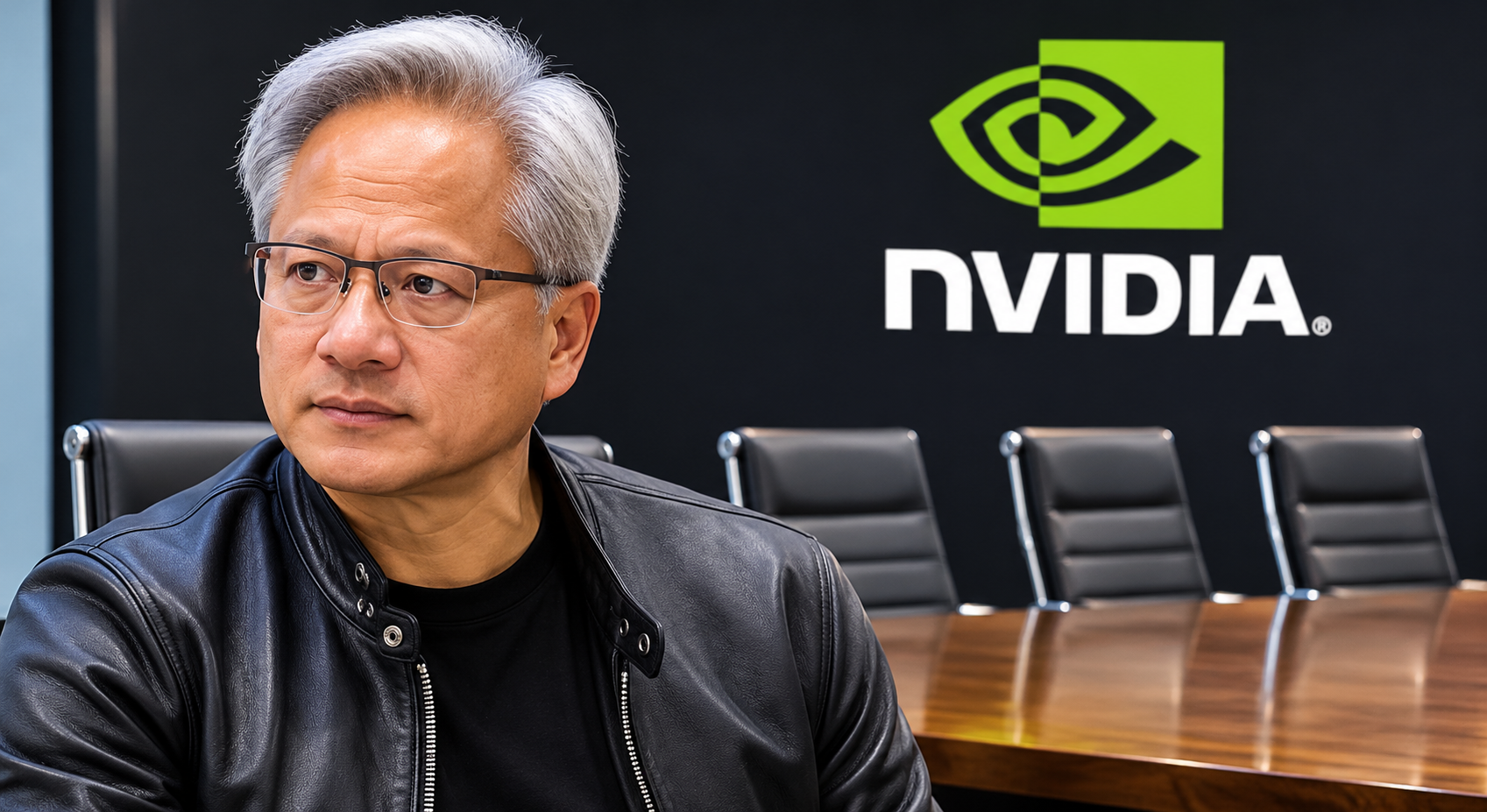
- Leadership Catalyst: Nvidia's board unanimously reinstated Jensen Huang as Chief Executive Officer, triggering an immediate +30% relief rally in the stock
- Global Chip Ripple Effect: The rebound eased broader AI bubble fears, lifting semiconductor peers across the Nasdaq and Asian supply chains.
- Valuation Discipline: Recent mega-AI listings like Anthropic highlight that institutional investors now demand clear enterprise revenue visibility over pure hype.
- Portfolio Strategy: High-beta AI stocks remain volatile around export policy shifts, making position sizing and cost averaging critical for retail investors.
Global technology and semiconductor markets staged a dramatic turnaround this week after Nvidia Corporation (NASDAQ: NVDA) surged more than 30% in a single explosive rally. The catalyst behind the massive rebound was an emergency unanimous decision by Nvidia’s board of directors to reinstate co-founder Jensen Huang as Chief Executive Officer, immediately ending a period of intense leadership uncertainty that had triggered a sharp global AI valuation sell-off.
Within hours of the announcement, institutional buyers stepped back into large-cap artificial intelligence equities, reversing billions of dollars in market value losses and lifting benchmark technology indices across the United States, Europe, and Asia.
1. Why Jensen Huang’s Return Sparked a 30% Relief Rally
In institutional equity markets, leadership continuity is often valued just as highly as quarterly earnings growth—especially during a high-stakes infrastructure cycle. Under Jensen Huang’s multi-decade stewardship, Nvidia transformed from a PC graphics card maker into the foundational compute engine behind generative AI models, sovereign AI clusters, and hyperscale data centers.
Prior to the board’s reversal, sudden executive shakeup concerns had caused Wall Street funds to aggressively de-risk AI hardware exposure, fearing potential delays in next-generation GPU architecture rollouts and cloud customer commitments. Reinstating Huang restored immediate confidence across three critical areas:
)
Foodlink F&B Holdings IPO Opens November 26: Price Band ₹181–₹191, GMP Today, Lot Size & Financials Explained
- Data Center Roadmap Execution: Hyperscale cloud providers rely on predictable multi-year chip delivery schedules to justify tens of billions in annual capital expenditure.
- Software Ecosystem Lock-In: Nvidia’s CUDA software moat and developer relationships remain tightly aligned with Huang’s long-term product vision.
- Supply Chain Coordination: Deep operational ties with foundry and memory partners ensure priority wafer allocation amid tight global capacity.
2. Global Ripple Effect: Nasdaq, Asian Chipmakers & AI Valuations
Because Nvidia acts as the bellwether for the entire artificial intelligence value chain, its +30% rebound quickly spilled over into global markets. The tech-heavy Nasdaq 100 recovered key technical support levels, while major Asian semiconductor suppliers in Taiwan, South Korea, and Japan posted sharp overnight gains.
At the same time, institutional analysts note that the recent volatility—alongside major market focus on frontier AI valuations such as Anthropic’s mega-listing—signals a maturing phase for AI investing. Capital is rotating away from speculative software names toward companies with proven enterprise cash flows and hardware bottlenecks.
| Market Segment | Key Players / Benchmarks | Immediate Market Reaction | Primary Growth Driver |
|---|---|---|---|
| AI Compute Leaders | Nvidia (NVDA), Broadcom, AMD | Strong +12% to +30% rebound | Hyperscaler GPU & networking orders |
| Asian Foundry & Memory | TSMC, SK Hynix, Samsung | Broad overnight rally (4%–9%) | Advanced packaging & HBM memory demand |
| Frontier AI Platforms | Anthropic & Enterprise Cloud | Heightened valuation scrutiny | Recurring enterprise API & model revenue |
| Tech Benchmarks | Nasdaq 100, SOX Chip Index | Reclaimed key moving averages | Institutional short-covering & ETF inflows |
3. Key Risks: Valuation Multiples & Export Policy Sensitivity
Despite the euphoria surrounding Jensen Huang’s return, disciplined investors should recognize that semiconductor equities remain high-beta instruments. Even after brief pullbacks, leading AI chipmakers trade at premium forward price-to-earnings (P/E) multiples that leave little room for quarterly guidance misses.
Additionally, cross-border semiconductor export restrictions, shifting tariff policies, and potential moderation in cloud capital expenditure remain ongoing macro variables. Rapid 20%–30% price swings in either direction are now a structural feature of the AI hardware cycle rather than an exception.

Gold Price Forecast Today (XAU/USD & India 24K): Spot Gold Rebounds Above $3,660 Ahead of Crucial US PCE Inflation Report
4. How Retail Investors Can Manage AI Stock Volatility
Chasing vertical green candles after a 30% single-session surge often exposes retail portfolios to short-term pullback risk. Instead, institutional portfolio managers recommend deploying capital in staggered tranches during market consolidations.
If you accumulated AI or semiconductor shares near previous highs and are evaluating whether to buy on dips to lower your break-even level, use our free Stock Average Calculator to compute your exact revised average buy price and total position size before placing your next order.
Bottom Line for Investors
Nvidia’s rapid board reversal and 30%+ surge underscore how vital executive stability and AI infrastructure demand remain to global equity markets. While the rebound has restored momentum across Nasdaq and Asian semiconductor stocks, long-term investors will achieve the best risk-adjusted returns by focusing on balance-sheet strength, reasonable entry valuations, and disciplined position sizing.
Frequently Asked Questions
Why did Nvidia stock surge over 30%?
Nvidia shares rallied over 30% after the board unanimously reinstated co-founder Jensen Huang as CEO, easing leadership uncertainty and reviving investor confidence in AI infrastructure demand.
How did Nvidia's rebound affect global semiconductor stocks?
The rally stabilized the Nasdaq 100 and triggered strong buying across Asian semiconductor manufacturers, memory chip suppliers, and AI hardware partners.
Are AI and semiconductor stocks still volatile?
Yes, AI stocks carry high valuation multiples and react sharply to earnings guidance, hyperscaler capex updates, and global chip export rules.